
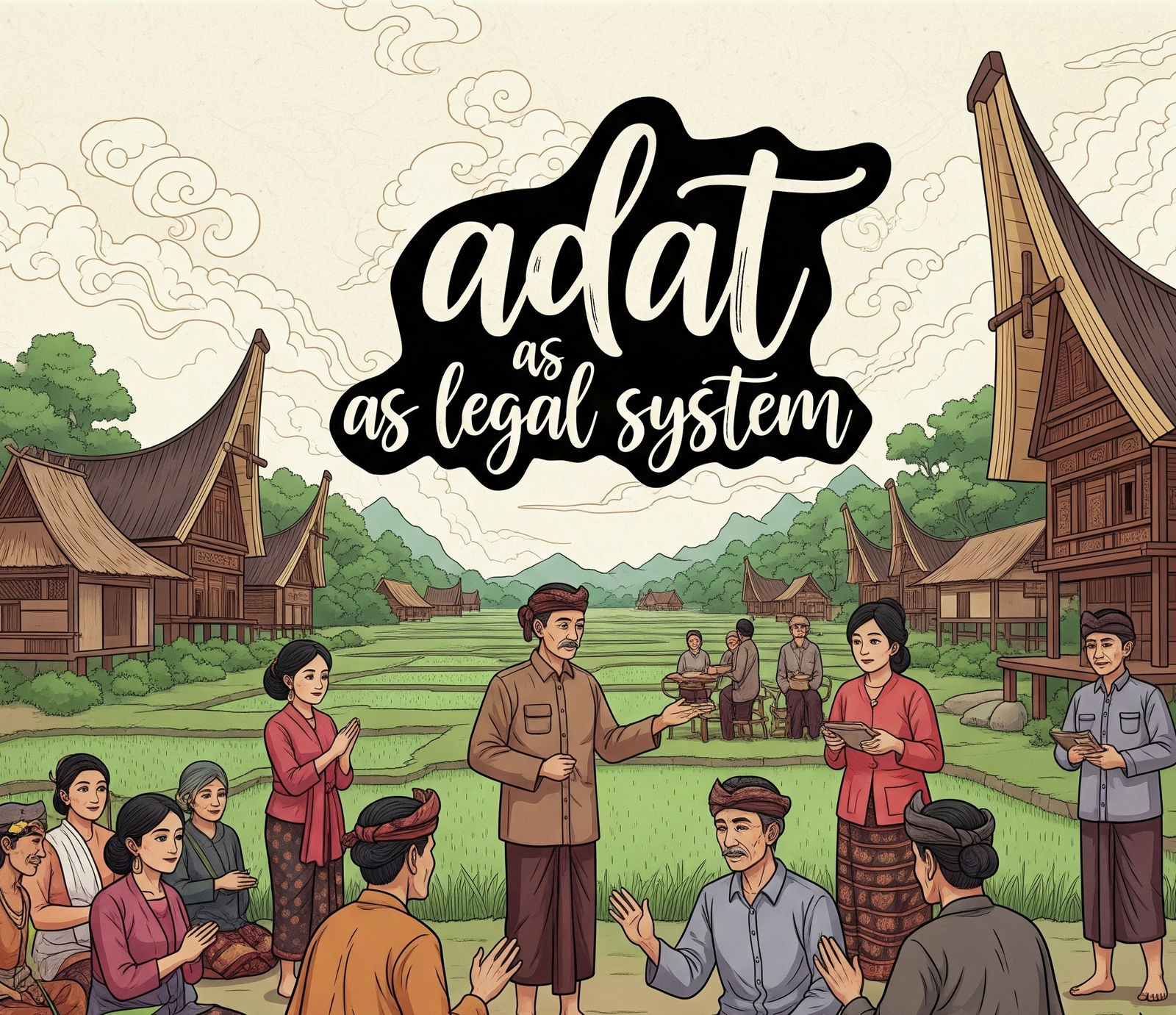
Adat law (hukum adat) is an integral part of Indonesia’s legal system, reflecting the country’s rich cultural diversity. Here are some key points about adat as a legal system:
- Foundation: Adat law is based on traditional customs, norms, and values that have been passed down through generations. It governs various aspects of life, including marriage, inheritance, and land rights12.
- Recognition: The Indonesian Constitution (UUD 1945) recognizes the existence and importance of adat law. Article 18B, Paragraph 2, and Article 32 emphasize the protection and promotion of adat communities and their traditional rights1.
- Application: Adat law is applied primarily within adat communities. It is often used to resolve disputes and manage community affairs through consensus and mediation, rather than formal legal proceedings2.
- Integration with National Law: While adat law operates alongside national law, it is considered a living law that adapts to the changing needs of the community. The Indonesian legal system acknowledges both written and unwritten laws, allowing adat law to coexist with formal legal frameworks13.
- Role of Adat Leaders: Adat leaders (pemangku adat) play a crucial role in implementing and upholding adat law. They are respected figures within the community who mediate conflicts and ensure that traditional customs are followed2.
- Challenges and Adaptation: Adat law faces challenges in modern times, such as conflicts with national laws and the pressures of globalization. However, it continues to evolve, maintaining its relevance and importance in Indonesian society3.
Would you like to explore a specific aspect of adat law or how it is practiced in a particular region?